Originally I made this post on Friday, as per the due date. That post is still alive, below. I’ve decided to leave it up for now. However, do ignore that if you are here to read my CC#2 (and thank you for being here). Please read this post instead:
This week I wanted to do things a bit differently. Rather than looking at the readings with the lens of a student; as assigned articles for discussing and arguing what they are discussing and arguing, I’m trying to look at this course instead as learning that can connect to my practice as an educator.
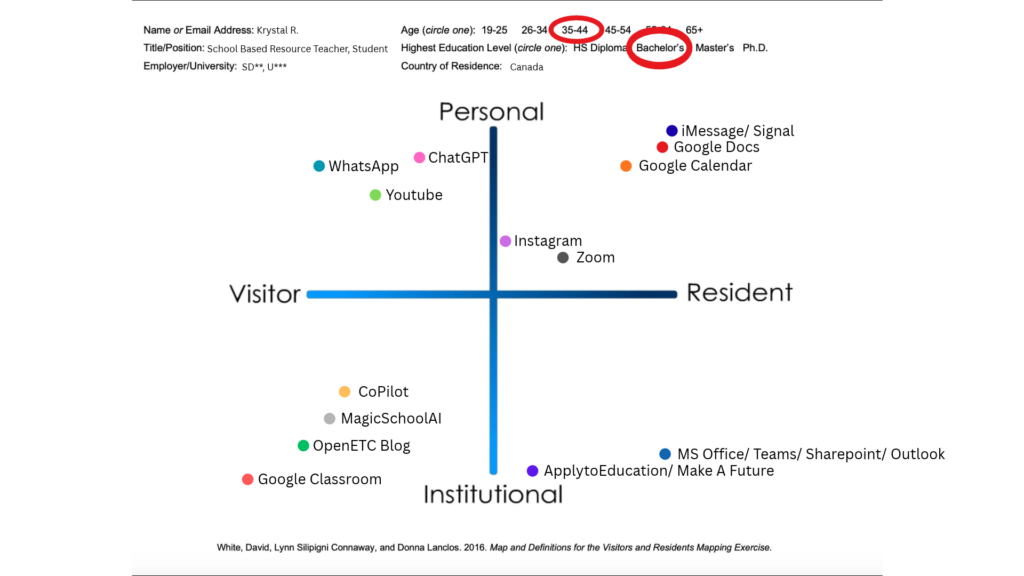
For one, I’m trying to move away from what the readings say about PLNs and instead work at hammering out a deeper understanding of what a PLN actually is for me and how it works in my professional life as a teacher.
Especially now that I know for certain that I will be remaining in this course, I want to make it work for me. I’ve been looking at how I can take away practical learning from this course (for example, if I were to get my students to set up a blog). Additionally, I want to make this meaningful by looking at the PLNs I am already a part of, examining how they are currently contributing to my learning and growth as a teacher, and considering how I can maximize their potential to support my ongoing professional learning.
I met with my pod group on Friday and this is something we talked about as well. One group member is pursuing the path of optometry and the other is becoming a teacher. The three of us all seemed to have in common that we were still seeking a deeper understanding of how PLNs work in our fields, as opposed to our classmates who will use platforms like LinkedIn in the obvious ways. For example, as a teacher, I’ve never been active on LinkedIn. It has never seemed to apply to me, not for getting hired, and not for any meaningful networking related to my career.
I started mapping out some of my professional network and connections I’ve built both in person and online. It made me think of connections I’ve built, or learning I’ve done, through professional development in the different school districts I’ve worked in. When I was in Yellowknife, one of the big consultants working with our district was Layton Schnellert. Many school districts have worked closely with him and Shelley Moore, particularly around meaningful inclusion. When I met Layton in Yellowknife, he talked about the work he had been doing in BC. He had worked with SD**. I had attended SD**. We talked about some of my former high school teachers he had worked with. And now I work in SD**, and I actually just found one of his books in the staff room that a former principal had left behind, and I picked it up!
I don’t use my full name online whenever I can help it. Aside from being listed as a teacher on my school website, I didn’t find anything about myself online, which is the intention. I have thought about it before, that my name (and location) is so public through my work which doesn’t feel completely comfortable to me.
I thought about the excerpt Adrian posted from Privilege of a Public Identity by Hilary Schmidt. Certain groups must be afforded reasonable accommodations. I wonder what kind of an answer I would get if I asked to remove my name from my employer’s website. And not just certain groups of people, perhaps we’re all owed some form of security. Like in Denmark?
This week I wanted to wait to meet with my Pod group until after I had a chance to do the readings. In hindsight I would’ve liked to meet earlier in the week. I found connecting with colleagues/ classmates provides valuable insight as we move through the assignments of the week.
Mapping ‘Visitors and Residents’ Exercise: